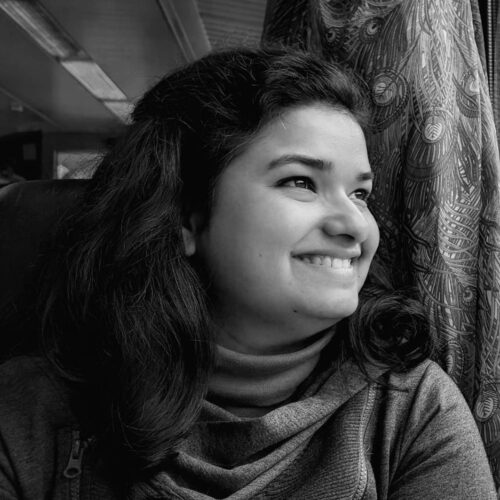
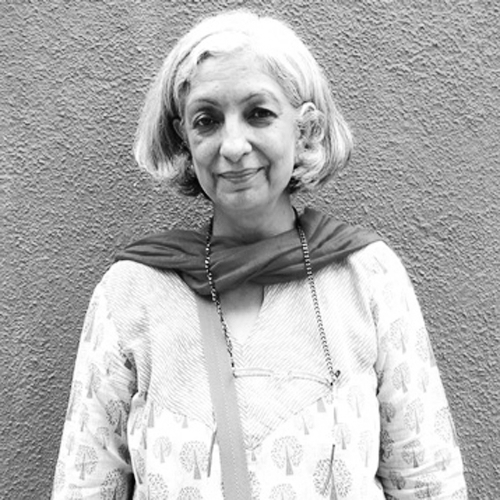
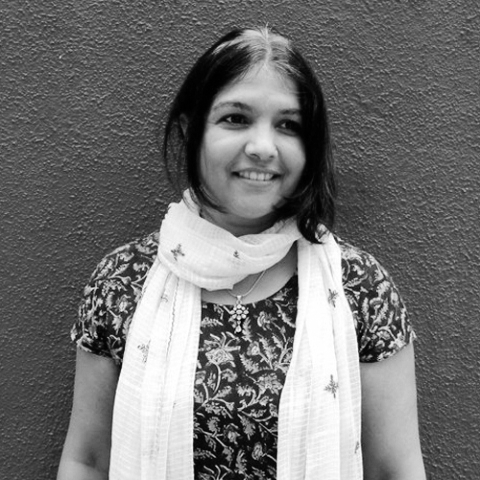
She started her academic journey as a TA of history to Prof. Chhaya and Prof. Varkey at CEPT in 1998. She, along with Parth Shah has conducted an international workshop named Archiprix in 2017. Recipient of INTACH Research grants in 2017 and 2023, her papers have been published in INTACH journals and ISVS conferences. She is associated in architecture practice with partner Parth Shah since 2000, with their firm name BPS Architects – OurPeopleTree based out of Rajkot. Their professional works have received prestigious national and international architecture awards and have been published. Sketching, Painting and Hindustani Music are her areas of interest. Her sketches on Varanasi were exhibited at a show in a contemporary art gallery in 2002 in Ahmedabad.
Her teaching assignment at IPSA began in 2005 and taught Design Studio, Basic design and History of Architecture. She has been instrumental in suggesting syllabus and a curriculum for first year design studio and basic design with a team of experts. As an academia, it’s her passion to synergise design thinking to vernacular literature, settings and makes it relevant to global demand of understanding processes one follows to design. At IPSA, She has been conducting village RSP with first year students since 2005, which has contributed towards documenting village dwellings & lifestyle of Saurashtra and Kutch region, creating a noteworthy native architecture knowledge bank.
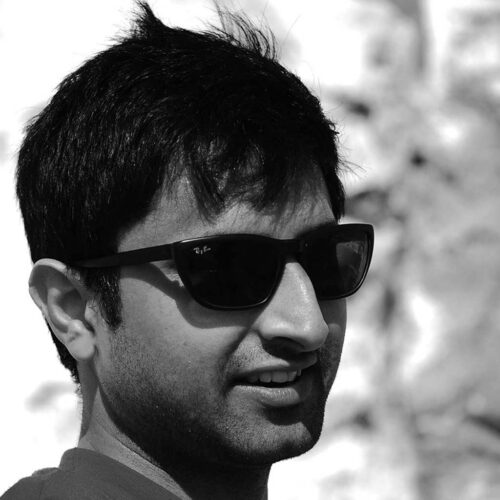
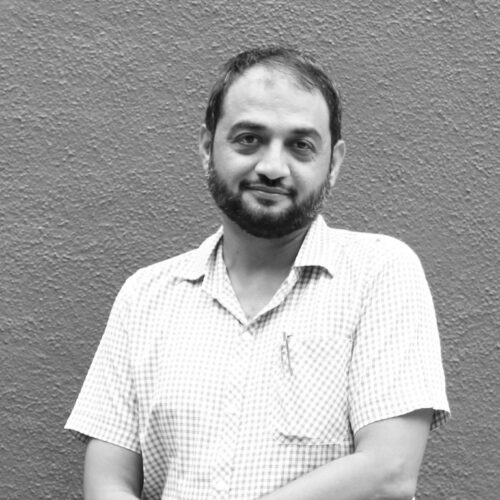
He has been associated with the Indubhai Parekh School of Architecture (IPSA), Rajkot, since 2000, where he teaches courses that bridge academic learning with professional practice. Alongside teaching, he has been practicing as an architect and interior designer since 2000, and as a planner and valuer since 2006.
At IPSA, Prof. Bharmal has played a key role in conceptualizing and establishing the Resource Centre, Environmental Lab, and IPSA Research Cell. He has also headed the Master’s Programme in Urban & Regional Planning (M.Plan). Currently, he leads the International Office and the Examination Department.
Through his work, he emphasizes connecting academia with practice, ensuring that students develop both theoretical understanding and practical insight into the complexities of architecture, planning, and the built environment. Beyond academics and practice; Prof. Bharmal writes poetries in Urdu, Hindi and Gujarati, focusing on life and cultural issues of society.
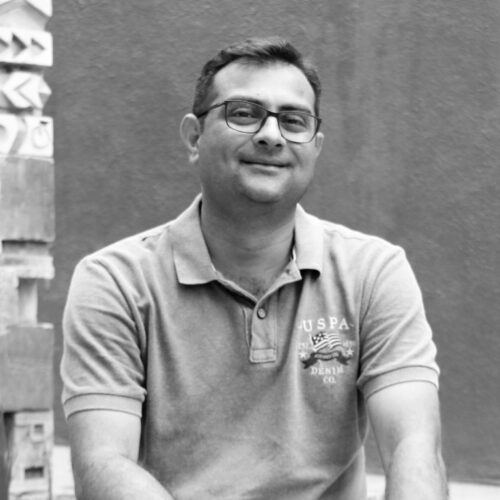
A graduate of SCET, South Gujarat University, Surat (2000), with First Class Distinction. His areas of expertise include participatory housing, universal accessibility, structural systems, building materials, and construction technologies, with a consistent emphasis on sustainable and context-responsive design approaches.
In the aftermath of the 2001 Gujarat earthquake, Prof. Changela worked as a Consultant Architect with the Hunnarshala Foundation and the Shelter Innovation and Support Centre at Kutch Nav Nirman Abhiyan. He contributed to large-scale housing and rehabilitation projects, including the Paraplegic Shelter Project, and continues his association with Hunnarshala as a Trustee at Karigarshala, a craft-based vocational education initiative.
At IPSA, he has pioneered experiential learning through the creation of construction yards as outdoor classrooms, where students engage directly with materials and building techniques. He also serves as Nodal Officer for SWAYAM Courses, integrating digital and blended learning. Over the years, He has guided more than 30 architectural research theses, presented at conferences, and conducted workshops and training programs on sustainable construction pedagogy. Passionate about documenting traditional knowledge systems, Hitesh has researched vernacular practices in Western India for over two decades.
His academic vision lies in bridging traditional wisdom with contemporary innovations, making construction knowledge more accessible, sustainable, and inclusive.
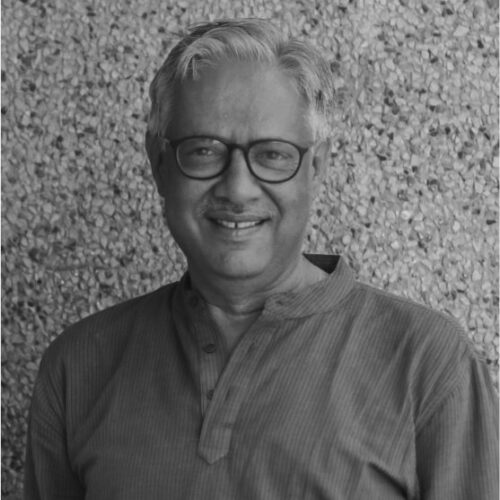
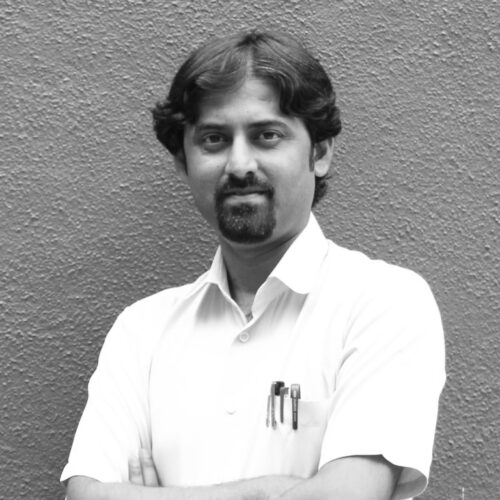
His academic and professional interests lie in architectural heritage documentation and the study of traditional materials. He has documented historic structures such as houses in Dwarka, Darbar Gopaldas Haveli at Vaso, and Chorwad Palace. With a particular admiration for wood as a building material, he has developed proficiency in its associated construction technologies. His teaching philosophy emphasizes hands-on learning, encouraging students to engage with materials and methods through practical experience.
Beyond academics, he is actively involved in extracurricular pursuits such as printmaking, photography, and sports. He has travelled extensively across India and the United Kingdom, which has enriched his cultural and professional outlook. Currently, he serves as the Convener of the Training and Placement Cell at IPSA, working to establish strong professional networks and opportunities for students.
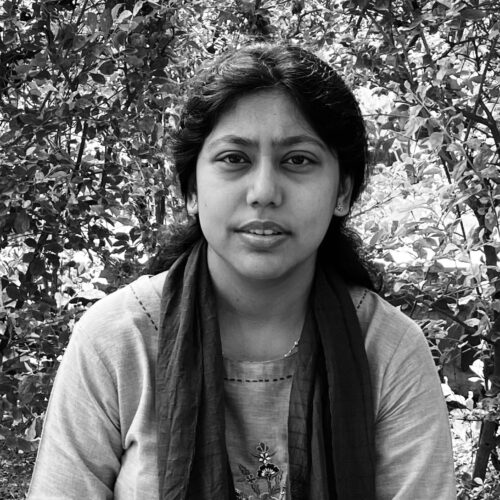
Her study on the ‘Semiotics of Architecture’ was awarded Best Thesis in the Master’s program in Architecture, for which she received the Louis Kahn Award and a Gold Medal. Her M.Phil Major focused on ‘Decoding Architectural Texts – A Rhetorical Analysis’ and Minor research was on ‘An Inquiry into Historiography as a Tool for Research – Islamic Architecture of India’.
According to her, critical thinking is the most important quality one must cultivate to respond effectively to different situations in life and career. In all the courses she teaches, the focus is on developing critical thinking abilities in students.
Beyond academics, currently, she is the Convenor of the Rajkot Chapter of INTACH, where she and her team actively engage with government and non-government organizations for the preservation and conservation of the heritage of Rajkot District. She is also deeply involved in promoting heritage education among the younger generation and serves as an Advisory Committee Member to the Heritage Education and Communication Services (HECS) Division of INTACH at the national level.
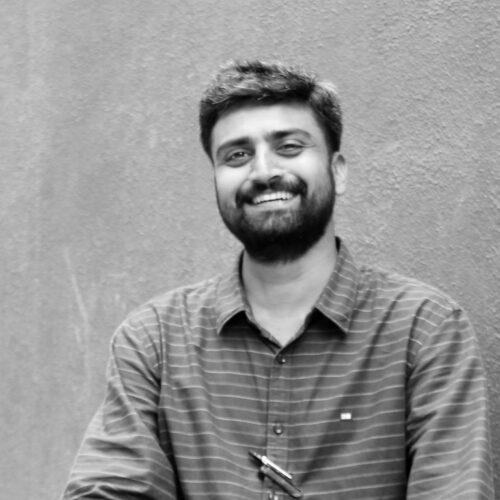
He is actively involved in research as a Research Assistant in the IPSA Research and Development Cell and serves as the Project Head from IPSA in the Gandhi Heritage Sites Mission. Alongside academics, he has been practicing as the Proprietor and Principal Architect of SPARSH, an architecture and interior design firm he established in 2008.
His professional and teaching philosophy emphasizes the process of making buildings while remaining sensitive to human interaction with built spaces. He has been instrumental in carrying out systematic heritage documentation projects and curating architectural exhibitions that bring together research, practice, and public engagement.
Through his dual roles as an academic and practitioner, Prof. Patel works toward fostering a balance between theory, hands-on practice, and contextual sensitivity in architectural education.
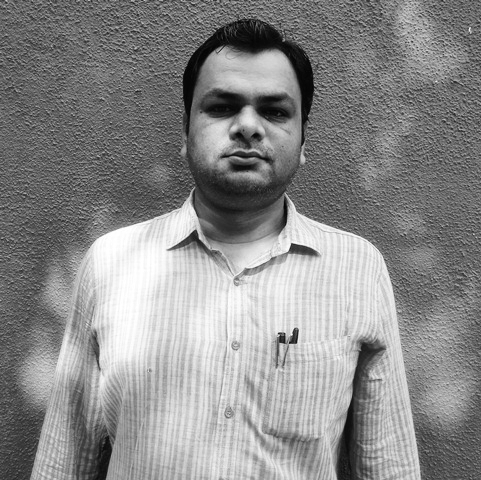
Before joining IPSA, Prof. Kotadia worked as an Architect and Urban Planner on projects across India. As a Town Planning Specialist with the Gujarat Urban Development Mission, he contributed to affordable housing initiatives and policy frameworks. With the Centre for Research, Development and Consultancy, he worked on master plans for Gandhidham, Ulhasnagar, Vizhinjam Port, and Guwahati, specializing in GIS mapping, land suitability, and infrastructure planning. His experience also includes the Batanagar Township project in Kolkata, slum-free city planning in Vadodara, and heritage restoration in Leh.
Prof. Kotadia combines academic teaching with practical expertise, focusing on sustainable, inclusive, and context-sensitive planning. His teaching approach emphasizes bridging research and real-world practice, preparing students to engage with contemporary challenges in architecture and urban development.

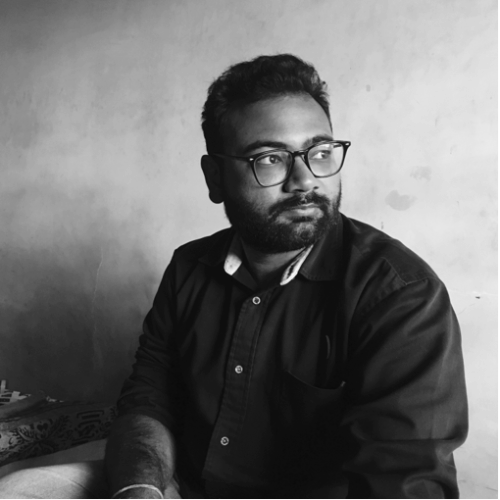
During his training, he interned at Meeta Jain Architects, Bengaluru, where he gained valuable exposure to unconventional modern houses, mud construction, and innovative structural systems under the mentorship of structural engineer B.L. Manjunath. His interest in heritage and documentation led him to work with Ar. Rupesh Patel on the Gandhi Heritage Site Mission, documenting “Kaba Gandhi No Delo” in Rajkot and “Kirti Mandir” in Porbandar. His undergraduate thesis, Relation between Structure and Space, reflected his curiosity in construction technology and structural expression.
Following graduation, he worked with Sparsh Design Studio, Rajkot, before establishing his independent practice, Maulik Lodhiya Architects. His first project was recognized by Surfaces Reporter magazine for its cost-efficient construction approach, marking his practice as one rooted in innovation and practicality.
Alongside architecture, he is a passionate watercolor artist, trained under Jayesh Shukla. He has exhibited in group shows, participated in art camps such as Karya Shala at Junagadh, and introduced watercolor electives at IPSA, integrating artistic exploration with architectural pedagogy.
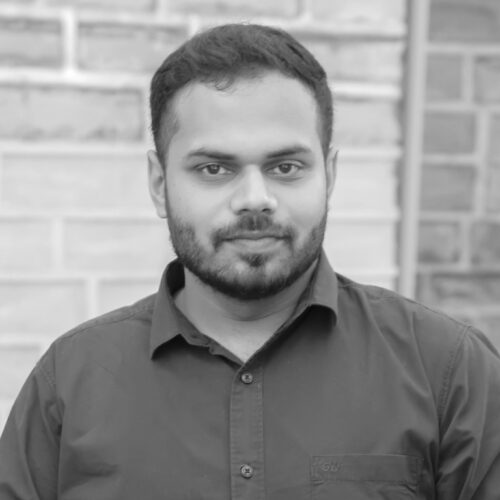
During his undergraduate years, he interned with the office of Architect Hafeez Contractor in Mumbai, contributing to landmark projects such as the Jio World Centre and the Nita Mukesh Ambani Cultural Centre (NMACC). These formative experiences provided him with insights into the complexities of large-scale design and their cultural and urban impact.
Alongside academics, in 2025 he co-founded Domus Collective with Upal Sakariya, a multidisciplinary design practice based in Rajkot. The studio focuses on thoughtful, collaborative, and context-driven design solutions that respond to local conditions while aligning with contemporary aspirations.
His academic and professional interests include the design of cultural spaces, community engagement in architecture, and material exploration as a medium of innovation. By combining these interests with his teaching, he nurtures in students a sensitivity toward context, culture, and people, while equipping them with practical and technical skills.
Prof. Parsana’s dual role as educator and practitioner reflects a commitment to fostering meaningful dialogues between practice and pedagogy, preparing students to engage critically and responsibly with the evolving role of architecture in society.